Historicizing Global Contemporary Art Markets
On 10 November I present “From Periphery to Centre: The Internationalisation of Contemporary Mexican Art (1990–2010)” at Historicizing Global Contemporary Art Markets in Lisbon.
Today Mexican curators work at the Reina Sofía, El Museo del Barrio and the Guggenheim, and the Mexican art market was estimated at USD 510 million in 2025. Argentine art, despite similar efforts, has not reached the same position, which makes Mexico an exception to the rules of art globalisation. The usual story rests on Gabriel Orozco: the Friday workshop in Tlalpan, Antwerp in 1992, Marian Goodman in New York, Venice and MoMA in 1993, and Kurimanzutto’s one-day show at the Mercado de Medellín in 1999. Orozco himself wrote in 2009 that this rise took place without help from the state.
The paper looks at the state’s part in it. After the 1985 earthquake artists began to build their own institutions, while the Salinas government combined neoliberal reforms, among them the privatisation of Telmex, with the creation of Conaculta and FONCA, whose grants supported a generation of artists. Under Calderón a FONCA programme paid galleries’ costs at international fairs, so that public money financed private firms in a market the state had left alone. The result is a blurred picture: a government that sold off state companies while funding culture to legitimise itself and to present Mexico to the world.
Tuesday 10 November 2026, 11:00–12:30, Panel 1
School of Arts and Humanities, University of Lisbon, Alameda da Universidade, 1600-214 Lisboa
Programme: globalartmarkets.wixsite.com/2026
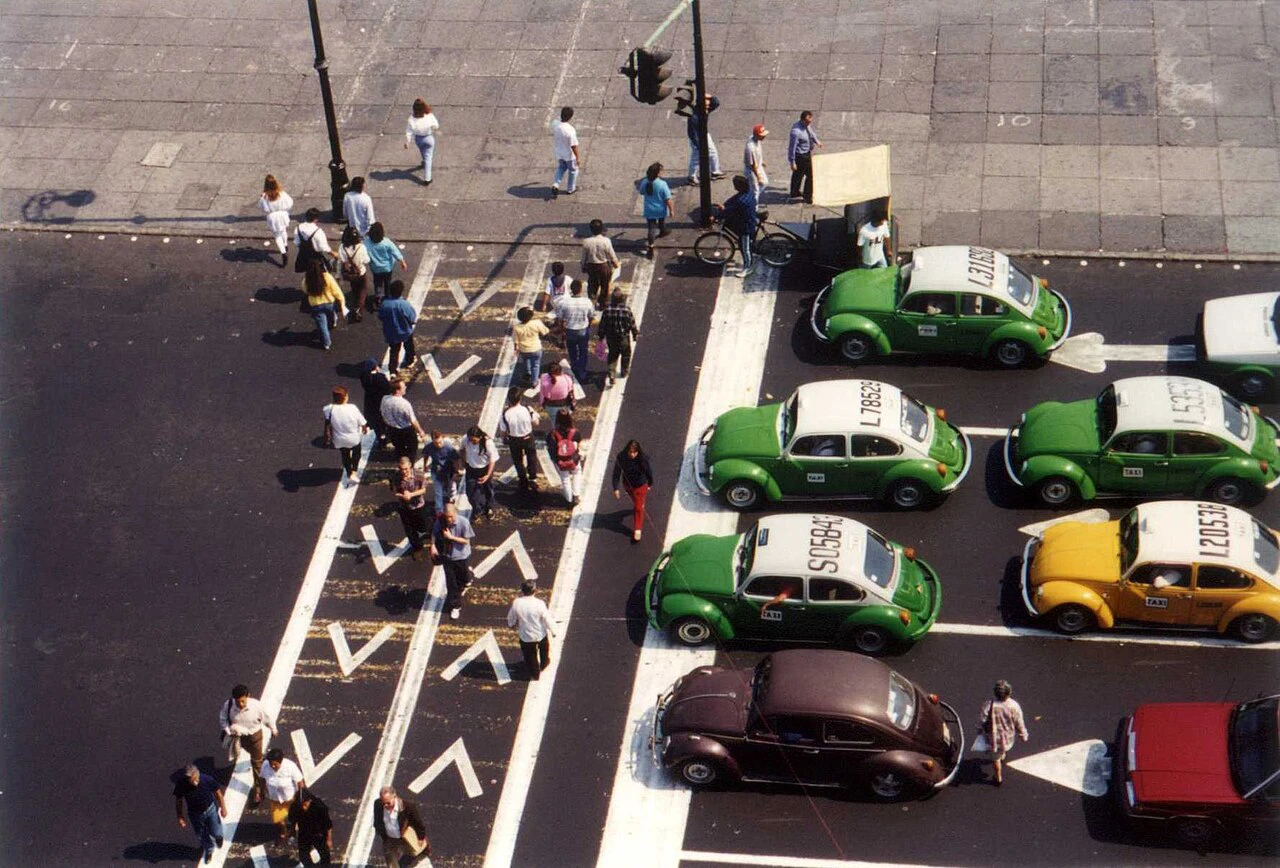
Photo: Zócalo, Mexico City, January 1999. Seb.lepers, CC BY-SA 3.0, via Wikimedia Commons (cropped).